


The bypass diode is an essential component in solar panels. It directly impacts the performance of the photovoltaic system, preventing damage caused by shading and optimizing the efficiency of the solar panel.
\n\n\n\nIn this article, we will address the operation of cell-level bypass diodes in solar panels and their application. However, before proceeding, it is necessary to understand what a diode is and its basic function to better comprehend its role in this context.
\n\n\n\nWhat is a Diode?
\n\n\n\nA diode is an electronic component with two terminals. The schematic symbol of the diode indicates its polarity. Upon observing the symbol closely, you will see a triangle forming a small arrow, indicating the direction in which electric current can flow. In diodes, current flows from the anode to the cathode, as shown in the image below.
\n\n\n\n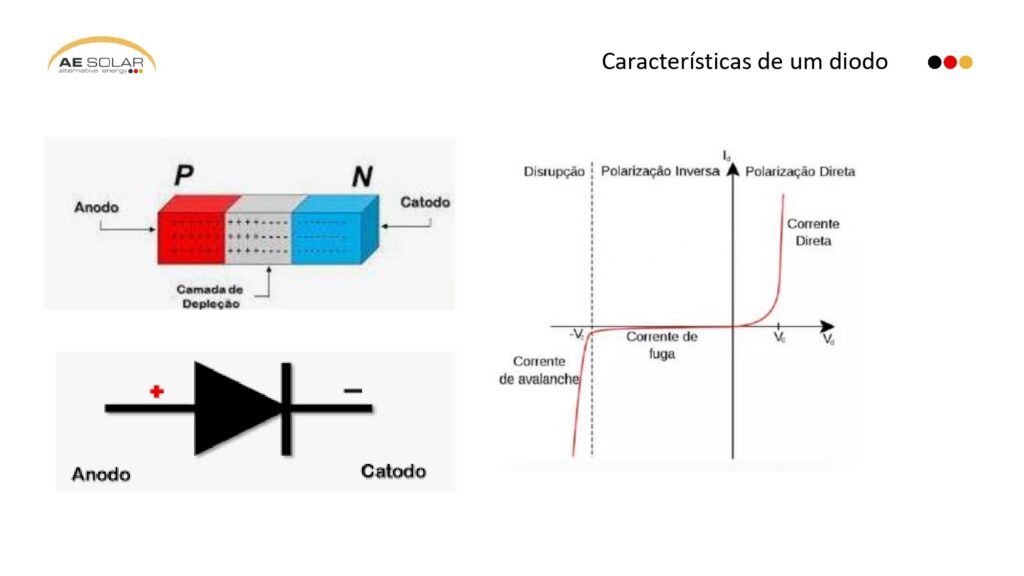
Operation of Bypass Diodes in Solar Panels
\n\n\n\nIn solar panels, photovoltaic cells are connected in series to form solar modules. When sunlight strikes these cells, light is converted into electricity. However, the problem arises when part of the cells is covered by shadows. Shadows can be caused by various factors, such as trees, buildings, antennas, or temporary objects like leaves.
\n\n\n\n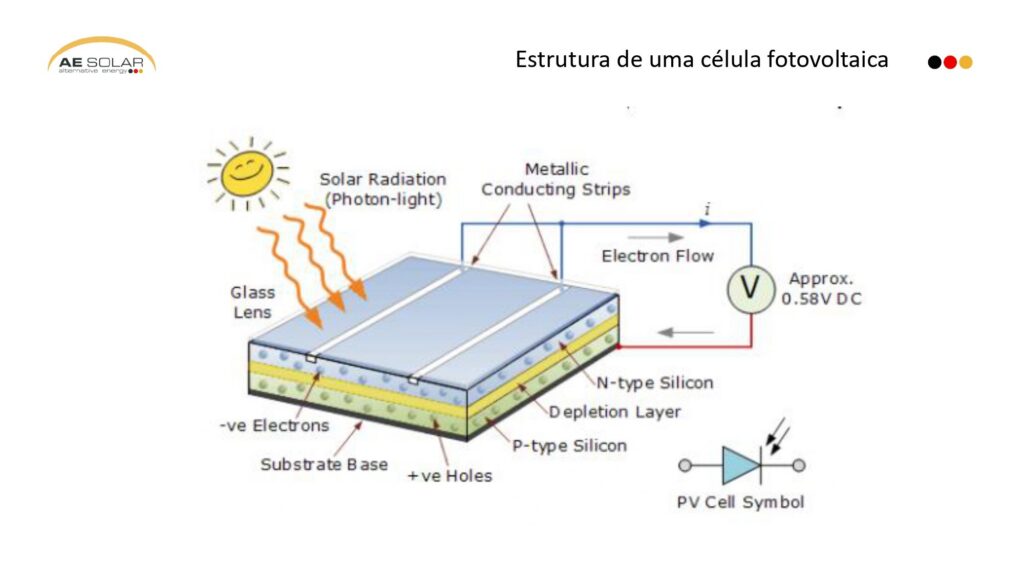
When a cell is shaded, it restricts the flow of electric current, impairing the operation of the entire panel. In this scenario, the bypass diode comes into action. It creates an alternative path for the electric current, diverting it from the shaded cells. Thus, the cells that remain exposed to light continue to generate energy efficiently.
\n\n\n\nThe Impact of Partial Shading
\n\n\n\nThe worst-case scenario for solar panels is partial shading. In this case, shadows cover only part of the solar modules. This type of shadow, usually caused by nearby objects, affects only part of the surface of the photovoltaic modules.
\n\n\n\nUnlike total shading, where the entire module is uniformly affected, partial shading alters the electrical behavior of the system. This causes the system to operate at a low-power point, significantly reducing energy generation.
\n\n\n\n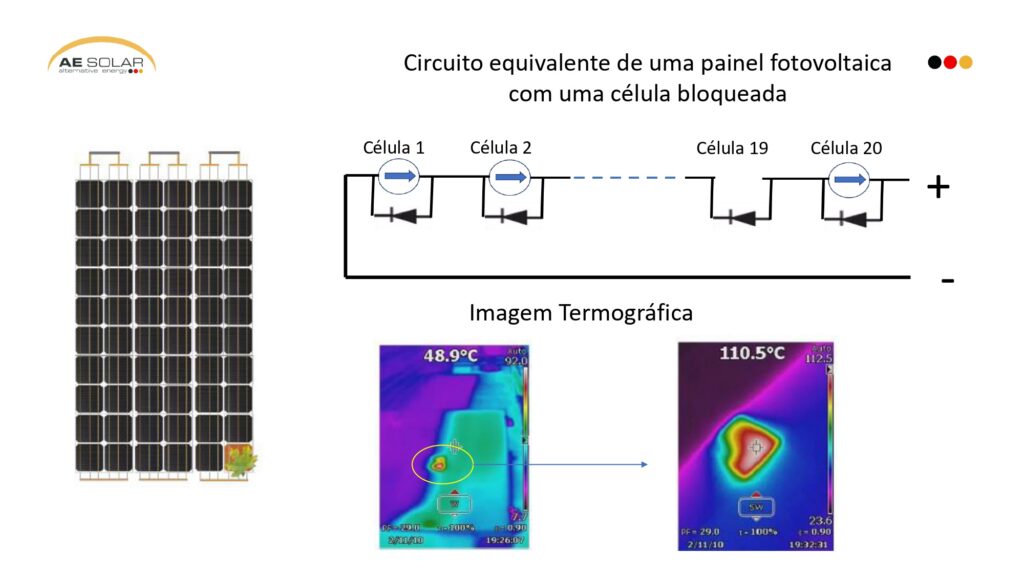
Photovoltaic modules are composed of cells connected in series. These modules, in turn, are also connected in series to form strings, which can contain hundreds of cells. Regardless of the shading situation, the current flowing through all cells is the same.
\n\n\n\nWhen only part of the cells in a string are shaded, the short-circuit current of these cells drops. Any current passing through a cell at a level higher than its short circuit causes overheating. This phenomenon, called a hotspot, can cause permanent damage to the cell.
\n\n\n\n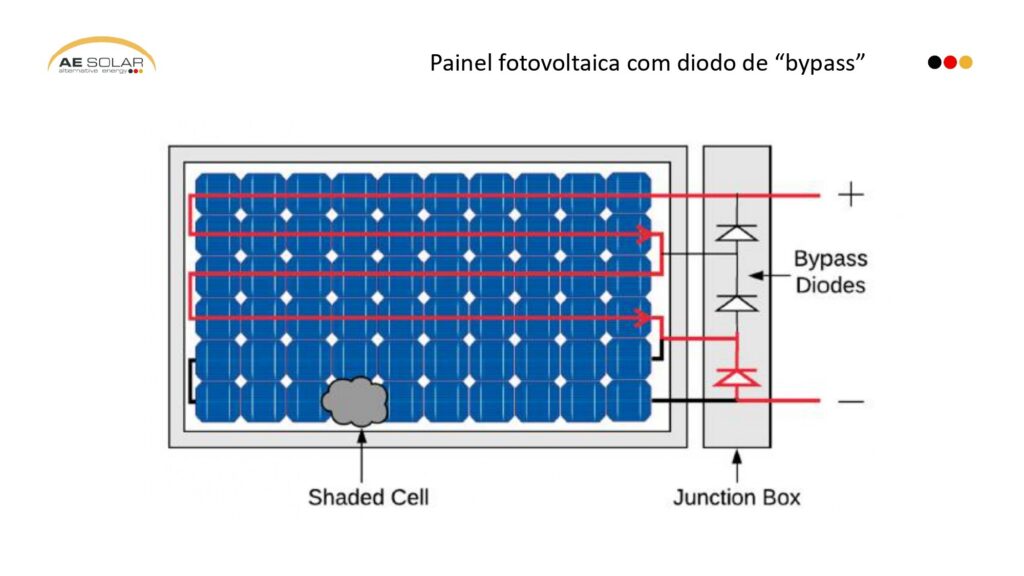
The Importance of Bypass Diodes Under Partial Shading Conditions
\n\n\n\nPartial shading is one of the greatest challenges faced by photovoltaic systems. In a total shading situation, the module is affected uniformly. Although its production is reduced, there is no major damage. However, in partial shading, shaded cells act as resistors, forcing illuminated cells to compensate for the loss.
\n\n\n\nWithout a bypass diode, this shaded area becomes a point of resistance. The other cells work harder, leading to the formation of hotspots. These points can reach very high temperatures, up to 160°C, and cause permanent damage to solar cells.
\n\n\n\nOn the other hand, the bypass diode allows electric current to bypass shaded cells, preventing overheating and ensuring that remaining cells operate efficiently.
\n\n\n\n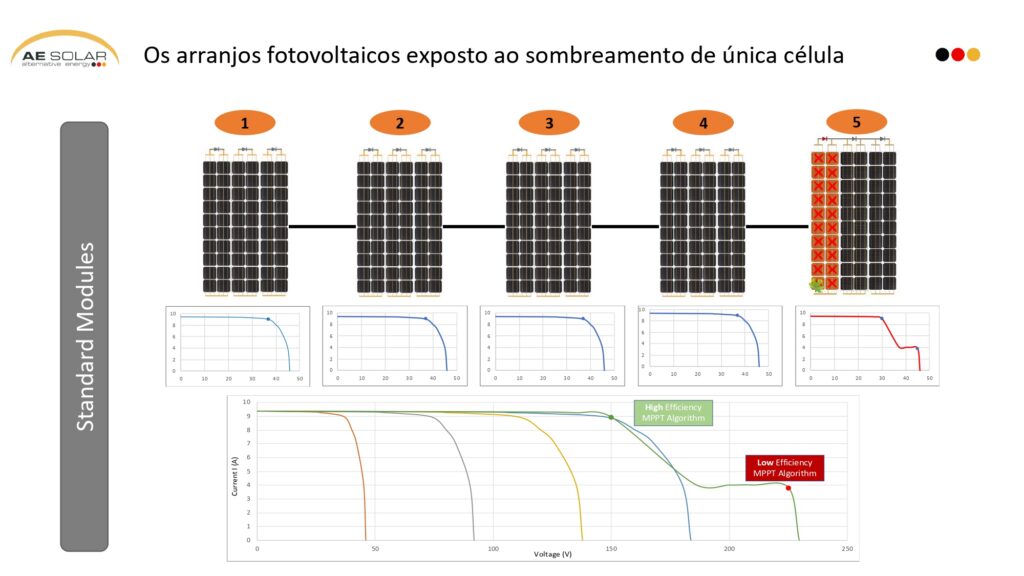

Hot-Spot Free Technology: Innovations in the Use of Bypass Diodes
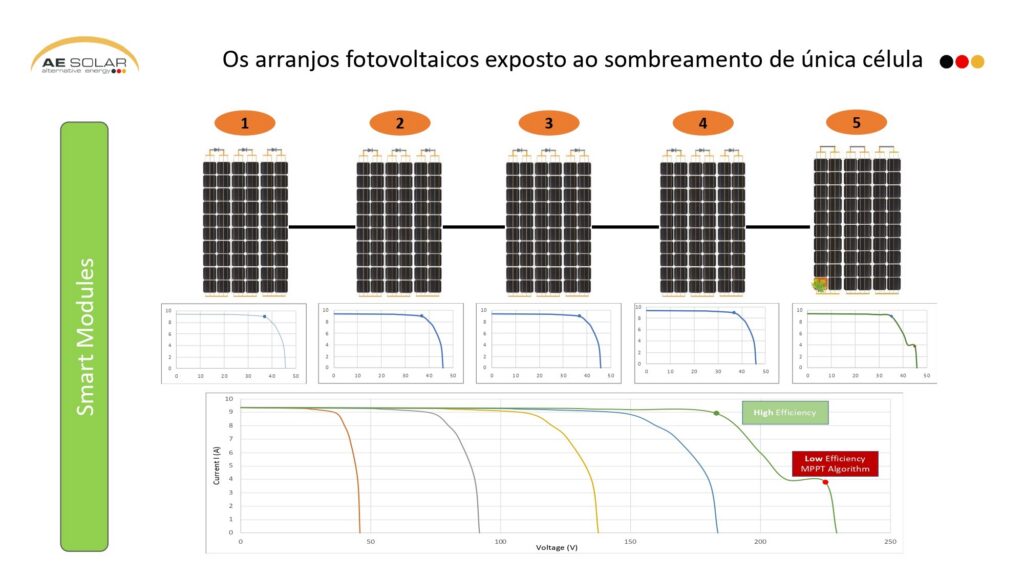
\n\n\n\nThe Hot-Spot Free technology applied to next-generation solar modules is an innovation that directly benefits from bypass diodes. This technology drastically reduces temperature in shaded areas of modules, avoiding hotspots and their harmful effects.
\n\n\n\nStudies conducted by the German institute Fraunhofer CSP, in compliance with IEC61215 standard, showed that this technology reduces safety risks associated with high temperatures, eliminating overheating. While traditional solar modules can reach up to 160°C in shaded areas, modules with Hot-Spot Free technology maintain temperature below 85°C.
\n\n\n\n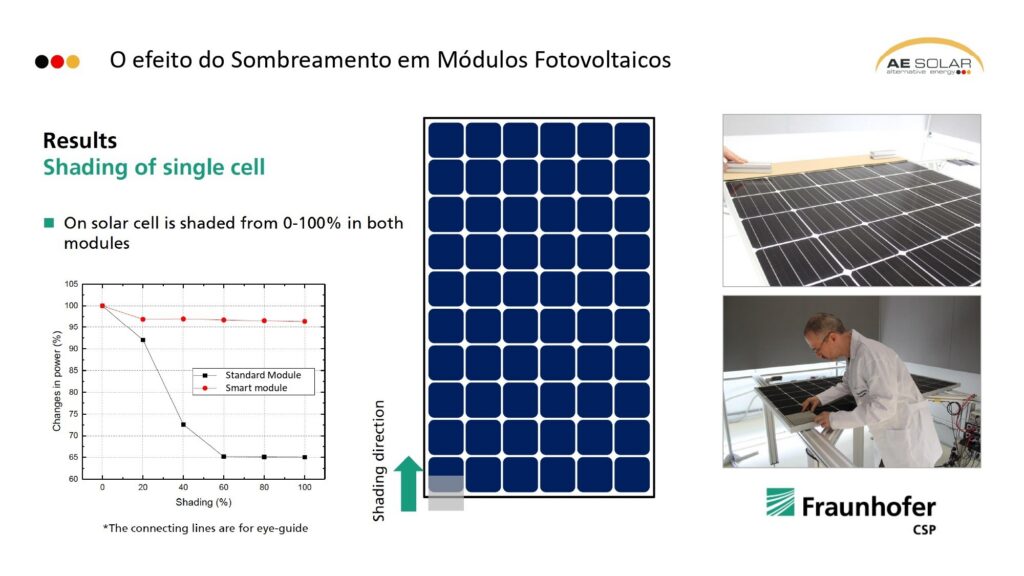
In addition to increasing system safety, this technology also improves energy efficiency. Compared to conventional solar modules, Hot-Spot Free can generate up to 30% more power in a 60-cell panel and up to 80% more power in a 72-cell panel. These figures represent a significant gain, especially in areas with high risk of partial shading.
\n\n\n\nFurthermore, this technology prevents sudden drops in module output caused by hot spots or module shading and, with smart optimizers, reduces current and voltage mismatch to significantly increase overall return for rooftop and ground installations.
\n\n\n\nBenefits of Using Bypass and Blocking Diodes in Solar Systems
\n\n\n\nThe combined use of bypass diodes and blocking diodes in photovoltaic systems brings considerable benefits:
\n\n\n\n- \n
- Protection against hotspots: The bypass diode prevents overheating of shaded cells, preventing damage to the panel. \n\n\n\n
- Efficiency under adverse conditions: Even with partial shading, the system continues to generate energy efficiently by diverting current. \n\n\n\n
- Extended lifespan: By reducing the risk of overheating, diodes help increase the lifespan of solar panels. \n\n\n\n
- Loss Prevention: Blocking diodes prevent current from returning to the panel, preventing energy waste. \n\n\n\n
- Greater Safety: With Hot-Spot Free technology, the system offers greater safety against fires and electrical failures. \n
An Expert Explains
\n\n\n\nTo explore the subject in greater depth, Canal Solar invited Ary Miranda, Chief Engineer at AE Solar Brasil, to a webinar. He details the operation of cell-level bypass diodes and the impact of partial shading on photovoltaic panel generation.
\n\n\n\nSunergia® is a company of the AE Solar GmbH Group, a German group that is a world reference in quality and know-how in photovolta
Looking to save up to 95% on your energy bill with German engineering?
Talk to our solar engineering experts and request a customized technical feasibility study.


