


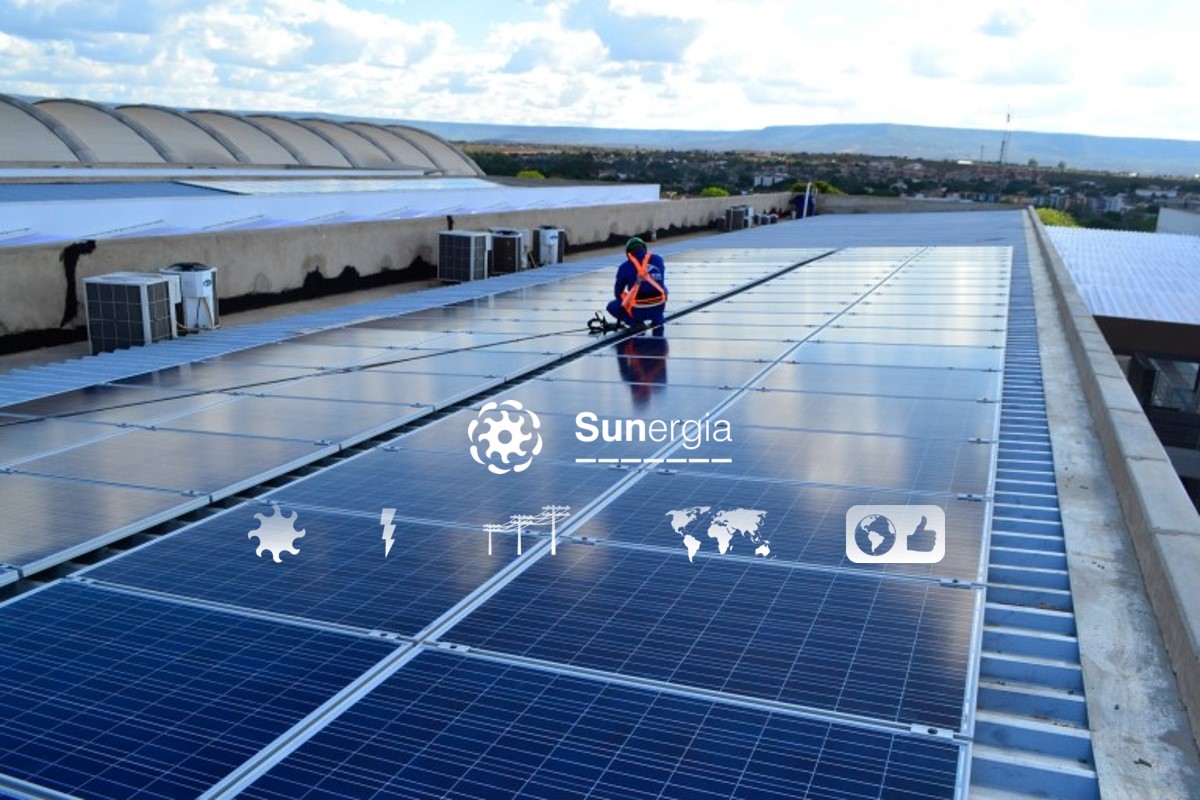
Race for the Sun: Solar Energy Generation to Serve Small Businesses
In an era where sustainability meets economic efficiency, small businesses are increasingly turning to solar energy as a strategic asset. The "Race for the Sun" is not just about generating clean power; it's about securing energy independence, reducing operational costs, and future-proofing operations against volatile grid prices.
The Technical Backbone: PV Modules and Inverters
At the heart of any solar installation lies the photovoltaic (PV) module. Modern monocrystalline panels offer high conversion efficiency, crucial for maximizing output on limited roof space. These modules are paired with on-grid inverters, which convert direct current (DC) from the panels into alternating current (AC) compatible with the public grid. For systems requiring backup power, hybrid inverters integrate seamlessly with BESS (Battery Energy Storage Systems), allowing businesses to store excess energy for use during outages or peak tariff periods.
Compliance and Regulation: The ANEEL Factor
In Brazil, the regulatory landscape is evolving rapidly. ANEEL (Agência Nacional de Energia Elétrica) has introduced new resolutions encouraging distributed generation and battery storage integration. Businesses must ensure their systems comply with these regulations to avoid penalties and qualify for incentives. Key considerations include:
- Grid Interconnection Standards: Ensuring inverters meet ANEEL's technical specifications for anti-islanding protection.
- BESS Integration: Adhering to safety protocols for battery storage systems, including fire suppression and thermal management.
- Net Metering Rules: Understanding how excess energy is credited back to the grid under current ANEEL policies.
Financial Viability: Payback Periods and ROI
The economic case for solar is compelling. With decreasing module costs and rising electricity tariffs, the payback period for small business solar installations has shortened significantly. A typical 10 kWp system can reduce electricity bills by up to 70% within the first five years. When combined with BESS, businesses can arbitrage energy prices by charging batteries during off-peak hours and discharging during peak demand, further enhancing return on investment (ROI).
Achieving Grid-Zero Status
Grid-zero refers to a facility that produces as much or more energy than it consumes from the grid. For small businesses, achieving this status offers multiple benefits:
- Energy Security: Reduced reliance on the public grid during supply disruptions.
- Brand Image: Demonstrating commitment to sustainability and corporate social responsibility.
- Resilience: Maintaining operations during extreme weather events or grid failures.
Conclusion: The Future is Solar
The "Race for the Sun" is a call to action for small businesses to embrace solar energy. By leveraging advanced PV technology, complying with ANEEL regulations, and optimizing financial returns through BESS, companies can lead the transition to a sustainable energy future. The time to act is now—before the competition does.
For more information on designing compliant and efficient solar systems for small businesses, consult with certified solar engineers familiar with German-standard practices adapted for local regulations.
Looking to save up to 95% on your energy bill with German engineering?
Talk to our solar engineering experts and request a customized technical feasibility study.


