


The technology of Photovoltaic Solar Energy is highly versatile; there are photovoltaic panels of various sizes, shapes, and even flexible panels. In this article, we will discuss the projects that have initiated this energy capture on solar roads and highways.
\n\n\n\nWith advanced technology and significant investments, the objective is to transform roads, highways, parking lots, bike paths, and other surfaces into major generators of clean energy.
\n\n\n\nDifferent from conventional panels, the photovoltaic cells are located under a layer of translucent resin or concrete that allows light to pass above the insulation layer.
\n\n\n\nSolar Roads and Routes in Operation
\n\n\n\nIn 2016, France was the first country to inaugurate a Solar Road, featuring an extension of 1 km and an area of 2,800 m², with a cost of €5 million. The project was deactivated after 2 years of testing because it did not generate more than 38,000 kilowatt-hours (kWh) of energy, whereas the estimate was for 300,000 kWh.
\n\n\n\nDue to various planning errors and its fixed position, where the panels are located, there is a shortfall of 30% in energy capture that contributed to the failure of the test. Another factor is that the chosen region receives strong sunlight for only 44 days per year.
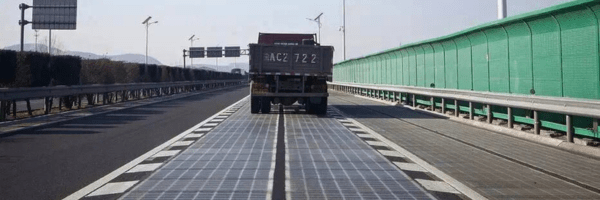
\n\n\n\nIn 2017, in Jinan, China implemented its first solar road, with an extension of 2 km, and capable of producing one million kilowatt-hours (kWh) of energy per year. It is the only solar road currently in operation. The reaction of the photovoltaic panels (which also serve as flooring for the highway) was tested and can withstand thousands of cars passing every day. The results were encouraging: even with normal daily traffic over the roads, the modules were not damaged, and at the same time, energy generation was not impaired, demonstrating the resistance and efficiency of this type of photovoltaic road under normal usage conditions.
\n\n\n\n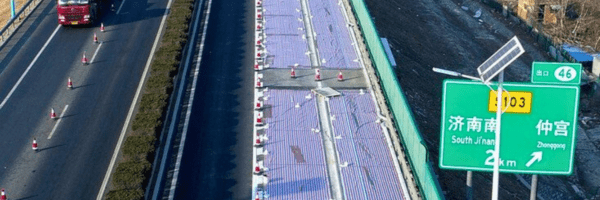
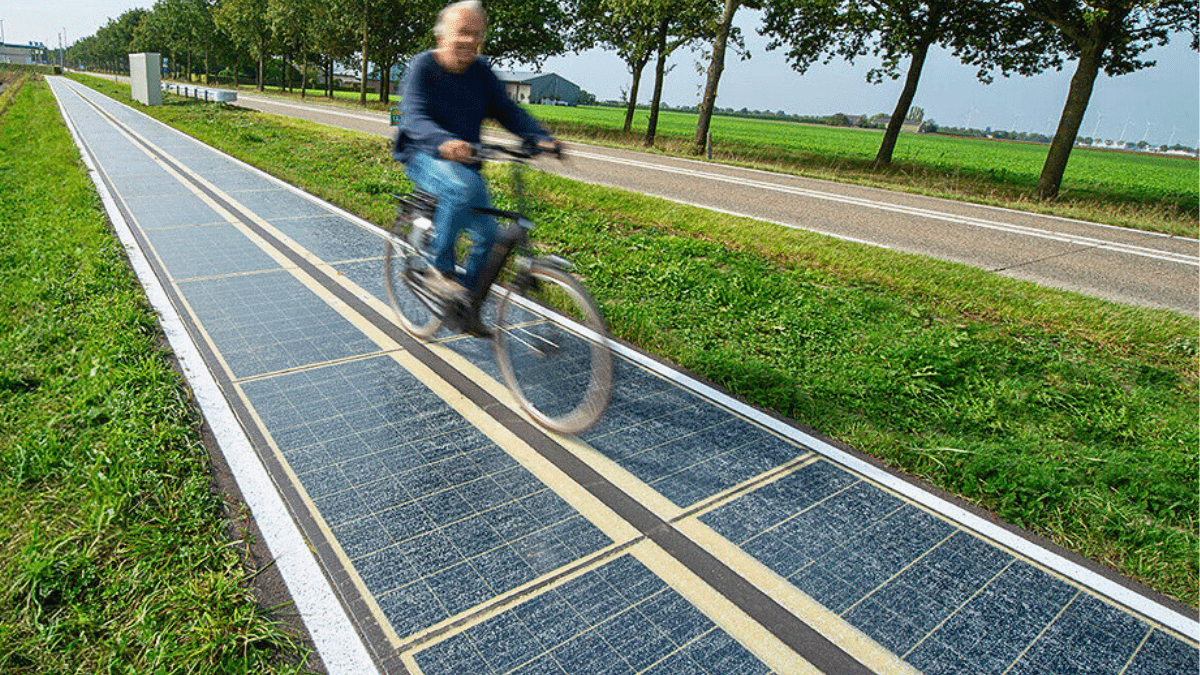
In 2014, the first solar bike path was built in the Netherlands; currently, there are two in operation, and by the end of this year, two more will be implemented. Bike paths are an excellent alternative for the use of this technology, transforming traffic routes into areas for generating clean energy.
\n\n\n\n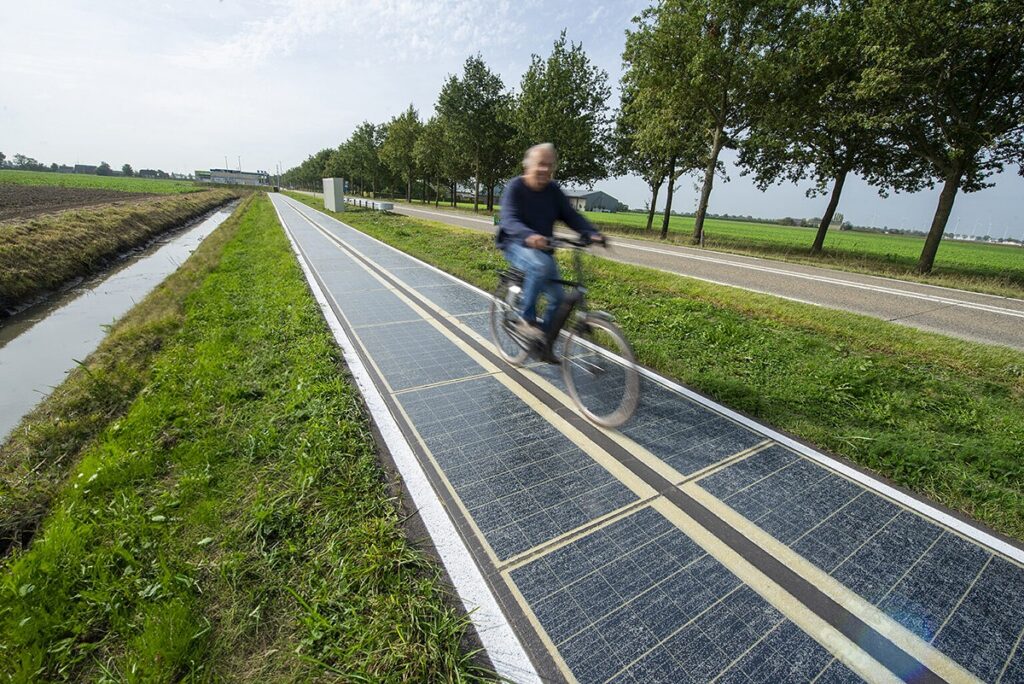
Projects Underway
\n\n\n\nEurope has a new project (PV-SÜD) in conjunction with Germany, Austria, and Switzerland, with the objective of producing solar energy by utilizing road areas to generate power for the population. The plans are for the Autobahn A81 highway, located in Germany.
\n\n\n\nThe project is financed by the three countries and has a forecast of three years, where it will be divided into two phases. The first phase will be the evaluation of the best methods for executing the project, and in the second phase, the pilot section will be implemented, where durability and impacts on the structure will be tested.
\n\n\n\nThe United States has a project called "Solar Roadways" (Solar Roads), where the objective is the construction of roads with solar technology. The project also proposes that during snow periods, it will be capable of heating to prevent ice accumulation on highways.
\n\n\n\n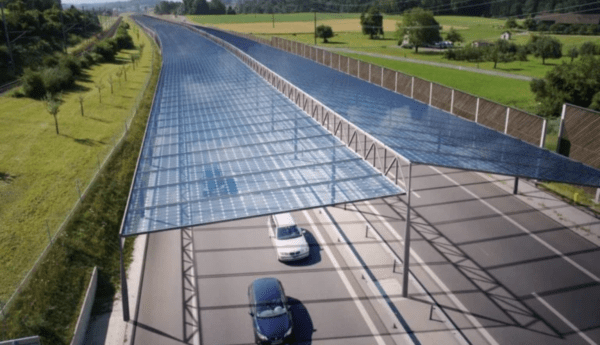
There are various possibilities for utilizing and capturing solar energy on roads, highways, and bike paths. Similarly, there is a long path of tests and studies to be undertaken, remembering that this is just one of the many initiatives that demonstrate the potential of Photovoltaic Solar Energy to revolutionize the energy matrix.
\n\n\n\nFollow us on social media and stay updated:
\n\n\n\n\nLooking to save up to 95% on your energy bill with German engineering?
Talk to our solar engineering experts and request a customized technical feasibility study.


