




Before we discuss the taxes; Regulatory Resolution No. 482/2012 is one of the main regulations of the National Electric Energy Agency (ANEEL) in Brazil, which establishes the general conditions for access of microgeneration and minigeneration distributed to electric power distribution systems and the electric energy compensation system.
\n\n\n\nThis resolution was an important milestone for the development of distributed generation in Brazil, encouraging the adoption of renewable energy sources, such as photovoltaic solar, by residential, commercial, and industrial consumers. It provided a favorable regulatory environment for the expansion of distributed generation, contributing to the diversification of the country's energy matrix and to the reduction of greenhouse gas emissions.
\n\n\n\nKnow the taxes belonging to the energy bill:
\n\n\n\n- \n
- PIS (Social Integration Program) and COFINS (Contribution for Social Security Financing): These taxes apply to the gross revenue of companies. For solar distributed generation, there is a reduced rate for these contributions. \n\n\n\n
- ICMS (Tax on Circulation of Goods and Services): ICMS applies to electric energy consumed from the public grid. However, for distributed generation systems, such as photovoltaic solar energy systems, ICMS is exempt for excess energy generated and injected into the grid. \n
Which taxes apply to solar energy?
\n\n\n\nPhotovoltaic solar energy in Brazil has experienced accelerated growth in recent years, driven by high solar incidence and policies encouraging distributed generation;
\n\n\n\nThe impact of "Fio B" on photovoltaic solar energy in Brazil
\n\n\n\nWith the new Regulatory Resolution No. 1,000/2021 from ANEEL, the collection of the so-called "Fio B" came into effect for new distributed solar generation systems starting in 2023. "Fio B" refers to payment for the use of the electric distribution grid, even for those who generate their own solar energy.
\n\n\n\nPreviously, consumers with photovoltaic systems did not pay for the entirety of the grid usage, which is necessary to transport the excess energy generated to the grid and allow its subsequent use.
\n\n\n\nWith the new rule, consumers who adopt solar energy will now pay a portion of this cost, maintaining the viability of the distributors' infrastructure.
\n\n\n\nThis change affects new users of solar systems but still preserves advantages in terms of energy bill savings and sustainability. Consumers who installed their systems before 2023 remain exempt from this charge until 2045, while new adopters must consider "Fio B" in their savings projections.
\n\n\n\nIncidence of ICMS, PIS, and COFINS on solar energy
\n\n\n\nIn the distributed solar generation model, consumers who install photovoltaic systems pay ICMS, PIS, and COFINS only on the energy they use from the utility's grid, that is, the energy they consume when their solar system is not generating enough to meet demand. This happens, for example, at night or on cloudy days, when solar energy production is low and it is necessary to resort to the electric grid.
\n\n\n\nHowever, there is no incidence of ICMS, PIS, and COFINS on the energy generated by the solar system nor on the energy injected back into the grid. This injected energy returns to the consumer in the form of credits, which can be used subsequently to compensate for grid electricity consumption. This tax benefit makes distributed generation even more attractive, since the consumer only pays taxes on the energy they actually purchase from the utility, not on the energy they generate themselves.
\n\n\n\nThis exemption of taxes on generated and injected energy contributes to increasing the savings provided by the solar system, reinforcing the financial advantages of this sustainable alternative.
Do you feel you need assistance to understand?
Click the button below and talk to our specialist to understand and carry out your solar project.
Exemption on energy injected into the grid and TUSD
\n\n\n\nWhen we talk about photovoltaic solar energy in Brazil, it is important to understand how ICMS (Tax on Circulation of Goods and Services) applies to consumption and injection of energy into the grid. For consumers who use distributed generation systems, there is a relevant tax benefit: there is no ICMS charge on energy injected into the grid nor on the Distribution System Use Tariff (TUSD). This tariff covers the cost of maintaining the electric grid, and the exemption on it is an important incentive for those who adopt solar energy.
\n\n\n\nHowever, the application of this exemption is not national and varies by state. Currently, some Brazilian states offer full ICMS exemption on TUSD for energy injected into the grid, while others charge the tax. Below are the states that guarantee this exemption according to the ICMS Agreement 16/2015, which allows states to adopt the exemption policy:
\n\n\n\n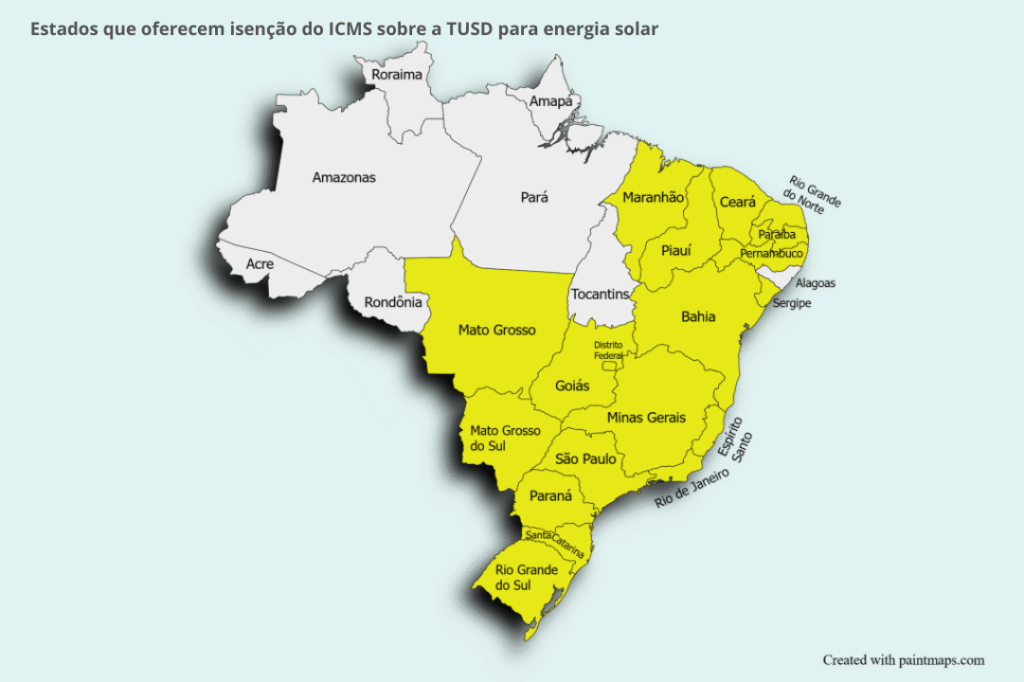
Tax incentives and benefits for solar energy
\n\n\n\nIn addition to ICMS, other forms of tax incentive for solar energy may include exemption or reduction of taxes on the importation of photovoltaic equipment and components, such as solar panels and inverters, as well as tax benefits for companies operating in the solar energy sector.
\n\n\n\n
It is important that these incentive policies be complemented by accessible financing programs, credit lines with favorable interest rates, and energy compensation policies, which allow consumers to generate solar energy credits that can be used to reduce or eliminate their electric energy bill.
\n\n\n\nThe decision by Confaz (National Council for Fiscal Policy) to cancel the decree that mandated the taxation of solar energy injected into the public grid by consumers' photovoltaic systems was a significant milestone in encouraging the use of solar energy in Brazil. This measure decentralized the decision on solar energy taxation, allowing each Brazilian state to decide individually on the matter.
\n\n\n\nSome states opted to exempt solar energy from ICMS incidence, while others continue to charge tax on energy credits injected into the grid. The list of states that opted for exemption includes some of them: Acre, Alagoas, Goiás, Mato Grosso, Maranhão, Minas Gerais, Rio de Janeiro, Rio Grande do Norte, Rio Grande do Sul, Roraima, São Paulo, and Tocantins. This exemption policy makes investment in solar energy more attractive and accessible to consumers in these states.
\n\n\n\nImpact of tax changes
\n\n\n\nOn the other hand, in states that did not adhere to the exemption policy, the ICMS rate applies directly to the energy credits that the user injects into the grid. This means that part of the generated and injected energy is retained for tax payment, reducing the economic benefit for consumers.
\n\n\n\nThis disparity in solar energy taxation between Brazilian states highlights the importance of coordinated policies at the national level to promote solar energy as a clean and renewable energy source. Harmonizing incentive policies and eliminating fiscal barriers can significantly contribute to the expansion of the solar energy market in Brazil, benefiting both consumers and the environment.
\n\n\n\nWhat is solar taxation and how does it affect the consumer?
\n\n\n\nSolar taxation is a fee associated with the maintenance of the electric grid. Solar energy installations by consumers can be classified into two categories: micro or minigeneration.
\n\n\n\nThe difference between them lies in the installed capacity; distributed microgeneration refers to electric power generation systems that use renewable energy sources, with a generation capacity of up to 75 kW. Minigeneration refers to systems slightly larger than microgeneration but still relatively small, with generation capacity greater than 75 kW and less than 3 MW.
\n\n\n\nThese electric power generation plants are installed in residences, condominiums, companies, and other establishments, either for energy use on-site or remotely, when consumed in a place different from where it is generated.
\n\n\n\nWhen a consumer unit produces electricity from solar energy, uses it for its own consumption, and sends the excess to the regional energy distributor, which converts it into credits for the consumer.
\n\n\n\nThe cost of maintaining electric power distribution is what motivates solar taxation, specifically on "Return Wire" or "Fio B", previously mentioned, being responsible for transporting the photovoltaic energy generated by the system to the electric grid.
\n\n\n\nWhat to expect in the future of electricity with taxation?
\n\n\n\nMini and micro generators of energy must now pay this tax, as established by Law No. 14,300, known as the Legal Framework for Microgeneration and Minigeneration Distributed, sanctioned in January 202
Looking to save up to 95% on your energy bill with German engineering?
Talk to our solar engineering experts and request a customized technical feasibility study.


